Jump Cat
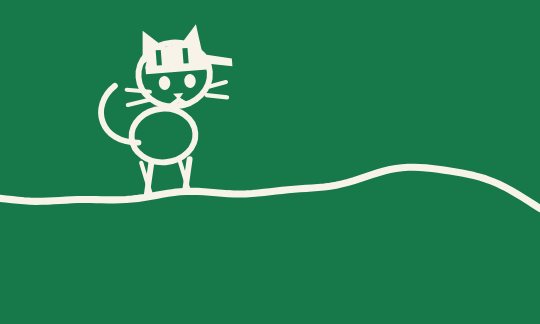
A doodled cat runs through endless sketchbook levels, jumping dogs, geese, gaps and crates.
- Developer
- GAMEFREEX
- Released
- Updated
- Game engine
- HTML5
- Platforms
- Browser (desktop, mobile, tablet), installable app (PWA)
- Orientation
- Portrait
- Controls
- Keyboard, Touch, Controller
- Multiplayer
- Yes, with friends: score race, up to 4 players
- Offline play
- Yes, once opened or saved with Download games for offline
- Price
- Free, no download, no sign-up
- Arcade25
- Portrait53
- Keyboard54
- Multiplayer53
Controls
Computer
- SPACE or Arrow Up to jump
- Press again in the air to double jump
- Hold for a higher jump
Phone or tablet
- Tap to jump
- Tap again in the air to double jump
- Hold for a higher jump
Controller
- A or Up: jump
- Hold A: higher jump
- Press again in the air: double jump
- Start: pause
Jump Cat: how to play, tips and FAQ
Written by the GAMEFREEX team.
A doodled cat runs through a sketchbook world, and everything in its way is drawn too: low walls, bushes, trees, bulldogs, hedgehogs, geese, tortoises, trash cans, fire pits, spikes, snails, snowmen, crows on posts and crows in flight. Holes in the ground need a proper leap, and some are rivers with a shark fin.
The levels never end. Each one is a little faster than the one before, a new theme and palette arrive every 4 levels, and new set pieces unlock as you go: floating platforms, crates to climb, bridges and stepping stones over long gaps, spike beds, springs. Before you reach any stretch of a level, a solver plays it with the cat's real jump and a slightly bigger hitbox than yours, and rebuilds it if it finds no way through. So a level is never a dead end.
Twelve kinds of bonus float along the route, worth between 40 and 200 points each. Every fourth bonus collected in a row adds one to your multiplier, up to x9, and bumping into anything resets it. You have three lives per run. Collected bonuses turn into Freex Coins, a virtual currency with no monetary value.
- Timing
- Anticipation
At a glance
- Game ends
- When the 3rd life is lost
- Levels
- No end, 1,300 m each
- Hit penalty
- 1 life, x1, minus 50 points
- Fall penalty
- 1 life, x1, minus 80 points
- Level bonus
- 250 per level, up to 10,000
- Jumps before landing
- 2
How to play Jump Cat
- Jump with Space or the Up arrow, or tap the screen.
- Press or tap again in the air for a double jump.
- Hold the button longer for a higher jump. A quick tap gives about 60 percent of the full height.
- Land on platforms and crate tops from above. Running into the side of a crate breaks it and costs a life.
Controls, action by action
| Action | Computer | Phone or tablet |
|---|---|---|
| Jump | Space or Up arrow, or a click | Tap the screen |
| Double jump | Press again in the air | Tap again in the air |
| Jump height | Hold for full height, release early for a short hop | Hold for full height, lift early for a short hop |
| Queue a jump | Press up to 0.12 s before landing | Tap up to 0.12 s before landing |
Levels, themes and set pieces
Every level is 1,300 m long and opens with a flag and a short safe stretch. Level 1 lasts about 25 seconds. The first five levels are gentle: levels 1 and 2 only have low obstacles, nothing taller than a trash can shows up before level 6, and the breaks between obstacles are longer. The cat speeds up a little with each level, about 40 percent faster by level 40 and close to 50 percent by level 60, so a level past 50 takes about 17 seconds. Reaching a new level pays 250 points times the number of levels behind you, up to 10,000 from level 41 on.
A new theme and palette arrive every 4 levels: Park, Riverside, Snowy Hills, Storm Road, Old Town and Meadow, each with its own obstacles and weather. The first theme follows the weather of your world. Set pieces unlock as you go, and the level where one unlocks opens with it: platforms at level 2, crates at 4, platform bridges over long gaps at 5, two obstacles close together at 6, spike beds at 7, springs at 9, crows in flight at 11, gaps with an obstacle on the only platform at 13, gap and obstacle gauntlets at 15, crate towers at 18, stepping stones over rivers at 22 and two set pieces back to back from 30.
Why every level can be cleared
Levels are built a few seconds ahead of the cat, one stretch at a time. Before a stretch is kept, a solver plays it with the same physics as the game: three hold lengths, double jumps at several timings, landings on platforms and crates. It uses a hitbox the size of the whole cat drawing plus a margin, while yours is a bit smaller than the drawing, and the obstacle boxes you can hit are 18 percent narrower and 16 percent lower than their drawings. A jump only counts if pressing it 1/120 or 1/60 of a second later also works and lands on the same spot, and the stretch must end with the cat standing on the ground. If the solver finds no way through, the stretch is rebuilt easier, up to five times, and in the end replaced by open ground.
Bonuses are placed at the top of the jumps the solver used, on platforms and on crate tops, so each one can be reached. In a score race the levels come from the room seed and every run starts at level 1, so all players meet the same levels.
Scoring, bonuses and difficulty
Each bonus has a fixed value before the multiplier: paw 40, milk carton 60, ball of yarn 60, feather 70, butterfly 80, bell 90, fish 100, ladybug 110, mouse 120, kibble bowl 140, sardine tin 150 and star 200. The multiplier also applies to distance, so at x9 running itself earns 9 times as much. The chain has no time limit: only a hit or a fall resets it.
After a hit, the cat bounces, keeps its double jump to recover and is protected for 1.1 s. Running into the side of a crate breaks the crate and counts as a hit. After a fall, the cat comes back at the start of the next stretch, never over a gap, with 1.4 s of protection.
In solo play the game adjusts a little to you. Each lost life makes the next levels easier, and a run that ends by level 3 eases them a bit more. Two levels in a row without losing a life push them back up. At most, levels get 7 percent slower, with gaps 10 percent narrower and breaks 20 percent longer, or 3.5 percent faster with gaps 5 percent wider. The setting is kept on this device. In a score race it is off.
Tips to score higher
- Short taps for low obstacles, a held jump for trees, snowmen and crates. A crow flying a little above head height is passed by staying on the ground.
- A press shortly before landing is kept and fires the moment the cat touches down, so you can queue the next jump early.
- Running off an edge still leaves a split second to jump from it.
- Rush a bonus only when nothing is coming. The multiplier is worth more than any single pickup.
Common mistakes
- Pressing the second jump right after the first. While the cat still rises faster than a double jump would push it, the press adds nothing and the double jump is spent. Use it near the top of the first jump.
- Letting go too soon over a tall obstacle or a crate tower. Releasing the button cuts your rise, so keep holding until the cat is clearly above it.
- Jumping at a crow flying a little above head height. Stay on the ground and run under it: even a short hop reaches it. Crows flying low are the ones to jump over.
- Treating crates like obstacles. You can land on top and use them as steps, but their side costs a life, so jump early enough to reach the top.
- Chasing a high bonus over open ground when something is coming. A hit costs a life, 50 points and the whole chain.
Jump Cat FAQ
How does the multiplier work?+
Every four bonuses in a row add one, up to x9. Any hit or fall resets it to x1.
Does the game get easier if I keep losing?+
A little, in solo play. Each lost life makes the next levels slightly slower, with narrower gaps and longer breaks, and two clean levels in a row push them back up. In a score race the adjustment is off and every player gets the same levels.
Is there any violence?+
No. One button, a cat and hand-drawn art.