Diplomat Protocol
Run the diplomacy of a made-up world from a conference room with a holographic map: negotiate, mediate and write reports that get fact-checked.
- Developer
- GAMEFREEX
- Released
- Updated
- Game engine
- HTML5 (WebGL, Babylon.js)
- Platforms
- Browser (desktop, mobile, tablet), installable app (PWA)
- Orientation
- Portrait
- Controls
- Keyboard, Mouse, Touch, Controller
- Multiplayer
- Yes: live 1v1 battles online (quick match or with friends), and on one device
- Offline play
- Yes, once opened or saved with Download games for offline
- Price
- Free, no download, no sign-up
- Strategy4
- 3D16
- WebGL17
- Portrait53
- Keyboard42
- Mouse55
- Multiplayer53
Controls
Computer
- Click a nation on the hologram or in the list, drag to look around, wheel to zoom
- Pick actions on a crisis or a nation, they fill the week calendar
- Q and E change nation, M map colors, N ends the week
Phone or tablet
- Tap a nation on the hologram, pinch to zoom
- The tabs at the bottom: Crises, World, Week, Team
- END THE WEEK in the Week tab
Controller
- Left stick: move the pointer, A: tap
- LB and RB: previous or next nation, X: map colors
- LT: crises, RT: your week, Y: end the week
- D-pad moves through briefings, reports and talks
- B: close, Start: pause
Diplomat Protocol: how to play, tips and FAQ
Written by the GAMEFREEX team.
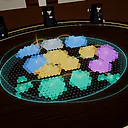
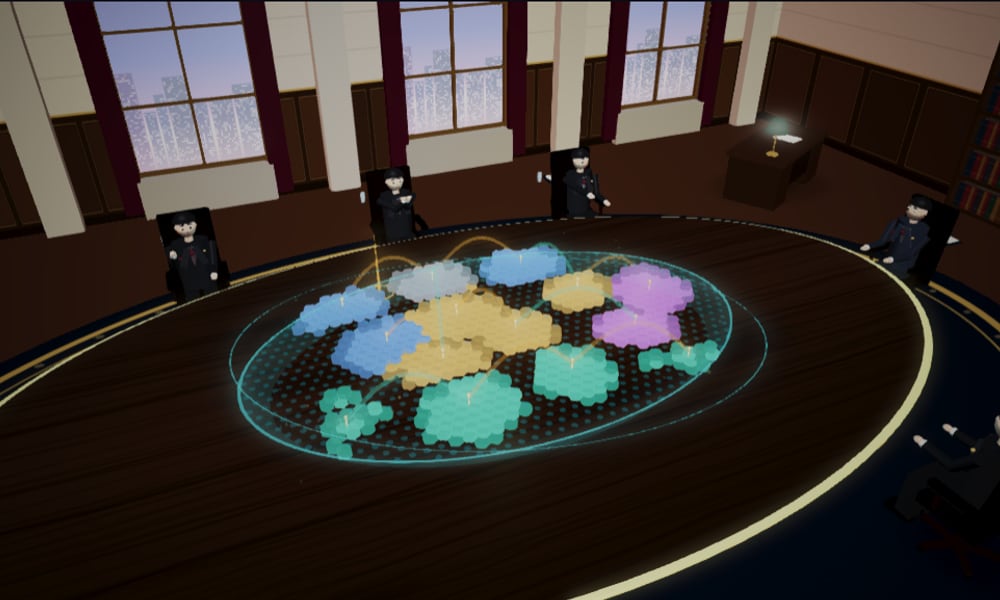
Diplomat Protocol is a turn-based strategy game about diplomacy. You work for the Concord, a made-up international body, from a conference room where a holographic map of fourteen made-up nations floats over the table. One turn is one week, and each week you have two to four days to spend.
Crises arrive with a deadline: a river island two governments both claim, a tariff fight over wind turbines, a freighter stuck in a strait with 22 sailors on board, a leaked cable, a flu cluster with stranded travelers, a gas pipeline cut during a cold snap. Nothing in the game is a war, and none of the nations, leaders or blocs are real.
Your score depends on how calm the world is at the end of the term, how much the governments trust you, how well you settled the crises and how honest your reports to the Council turned out to be.
- Planning
- Negotiation
- Reading people
At a glance
- World
- 14 made-up nations, 4 zones
- Turn
- One week
- Crisis types
- 13
- Campaign
- 6 chapters, 8 to 12 weeks
- Ranks
- 8, from Attaché up
- Summits
- 2 to 4 envoys, local or online
How to play Diplomat Protocol
- Monday, pick your line for the week: firm, conciliatory or ambiguous. It changes how talks, mediation and sanctions go.
- Fill the calendar from a crisis card or a nation card: meetings, gestures, intelligence, mediation, negotiation, sanctions, secret deals, summits, or a week off for a tired staff member. Each action costs influence, budget or Council favor.
- Negotiate: raise their mood with offers, then make your asks. Read them to learn what they care about and where their red line is.
- When a crisis ends, write the report: facts, framing, recommendation and tone. Unconfirmed facts are checked a few weeks later.
- Hire advisers, attachés and intelligence officers between weeks. Attachés add calendar days, advisers strengthen talks, officers check facts.
Controls, action by action
| Action | Computer | Phone or tablet |
|---|---|---|
| Select a nation | Click it on the hologram or in the list, Q and E (or [ and ]) to step through | Tap it on the hologram or in the World tab |
| Look around | Drag, mouse wheel to zoom | Drag, pinch to zoom |
| Plan an action | The buttons on a crisis card or a nation card | Same, in the Crises and World tabs |
| Staff on an action | Click the staff chip in the Week tab | Tap the staff chip in the Week tab |
| Map colors | M, or Trust, Blocs, Mood under the map | The buttons over the map |
| End the week | N, or END THE WEEK | END THE WEEK in the Week tab |
How a negotiation works
You sit down with the government that holds the key to the crisis. Their mood starts at 30 plus a quarter of their trust in you, a little higher with a conciliatory line and a good adviser, lower when the crisis is severe. You have two asks, and each one passes only when their mood is at or above its mark on the meter. A passed ask costs you some of that mood again.
Offers raise the mood according to what that government cares about: each interest weighs 1 to 3, and the effect of an offer is its interest values times those weights, times four. You do not know the weights at first. Read them (the first read is free with an adviser of skill 3 or more) or meet them in an earlier week. Every government has one red line; an offer that cuts into it, or an ask that touches it, costs mood and patience. When patience runs out they walk out; when moves run out you keep what was agreed.
A full deal settles the crisis with a quality between 55 and 100. A partial deal lowers its severity and buys two weeks. Hot crises (severity 3 or a last week) give you 50 seconds at the table.
Reports and truth checks
Every settled or failed crisis, and every summit, ends with a report to the Council. You pick up to three facts, a framing (plain, measured or flattering), one of three recommendations and a tone. Confirmed facts and facts your intelligence officer checked count fully; single-source facts count a little; press rumors count against you.
Two or three weeks later, the facts you could not confirm are checked. A wrong one costs 7 credibility and a point of Council favor, twice that if the report was flattering. A grade A report brings 2 favor, a D costs 1. Council favor at zero ends a solo term.
Scores
At the end of a term: 50 per point of world stability, 30 per point of reputation (your average trust from 0 to 100), 4 per point of quality of every crisis you settled, 15 per point of credibility, 150 per decoration, and 1,500 when a chapter's goals are met. An open-ended term adds 40 per week served. Being recalled or letting stability fall under 20 keeps three quarters of the score.
Tips to score higher
- A meeting in the week before a negotiation tells you one of their interests for free, and it raises trust, which raises their starting mood.
- Mediation settles a dispute in two or three visits without spending favor. Keep sanctions for crises where someone is pushing and time is out.
- Secret deals settle things at once, but each week there is a chance the press finds out, and a leak costs trust everywhere.
Common mistakes
- Asking before the mood is there. A refused ask costs a patience point, and three or four of those end the talks.
- Playing the most generous offer blind. Read them first: an offer that touches their red line can undo two good ones.
- Citing press rumors to fill a report. Two solid facts beat three shaky ones once the truth checks come in.
- Leaving staff on every action every week. Fatigue over 70 costs a skill point, and tired, idle or unpaid staff lose loyalty and may leak.
Diplomat Protocol FAQ
Are the countries real?+
No. The fourteen nations, their leaders, the four blocs and the zones are all made up, on a made-up map. The crises are diplomatic: disputes, trade, logistics, leaks. Nobody fights.
What are the game modes?+
A campaign of six chapters (8 to 12 weeks each, one more zone every chapter or so), a free term of 8 or 12 weeks or open-ended, a daily scenario that is the same for everyone that day, a summit for 2 to 4 envoys on one device (cooperative or competitive) and a live summit online.
How does the online summit work?+
Every player of the room is an envoy in the same world for eight weeks, with a private goal. Everyone plans at the same time; the week resolves when all orders are in or after two and a half minutes. The best score wins the round and goes to the leaderboard.
What do Freex Coins buy here?+
Suits for your diplomat and pieces for the office (an orchid, a bronze globe, a painting, a marble desk, a gold hologram). They are cosmetic only. Freex Coins have no money value.
Is my career saved?+
Yes. Rank, decorations, finished chapters, wardrobe and the term in progress are kept in this browser, and in your account when you are signed in.