Molecule Freex
Build 50 real molecules atom by atom in 3D, from hydrogen gas to caffeine, and share them.
- Developer
- GAMEFREEX
- Released
- Updated
- Game engine
- HTML5
- Platforms
- Browser (desktop, mobile, tablet), installable app (PWA)
- Orientation
- Portrait
- Controls
- Keyboard, Mouse, Touch, Controller
- Multiplayer
- Yes, with friends: score race, up to 4 players
- Offline play
- Yes, once opened or saved with Download games for offline
- Price
- Free, no download, no sign-up
- Education2
- Portrait53
- Keyboard54
- Mouse57
- Multiplayer53
Controls
Computer
- Click an atom in the tray, then a glowing socket (or drag it there)
- Drag or arrow keys to turn, wheel to zoom
- Keys 1 to 9 pick, Tab and Enter build
Phone or tablet
- Tap an atom, then a glowing socket
- Drag to turn, pinch to zoom, double tap to reset
Controller
- Left stick: move the cursor, A: tap an atom or a glowing socket
- Right stick: turn the molecule, LT / RT: zoom
- LB / RB: pick the atom, Y: next socket, X: build there
- B: reset the view
- Start: pause
Molecule Freex: how to play, tips and FAQ
Written by the GAMEFREEX team.
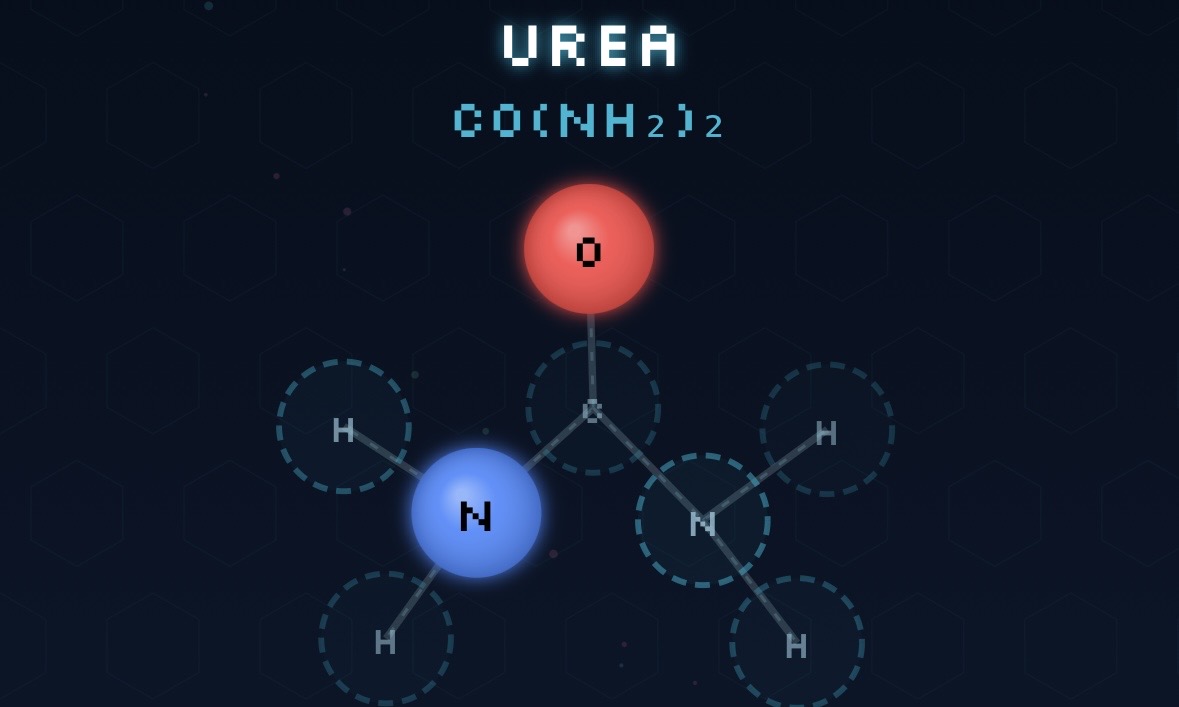
Molecule Freex puts a molecule above a glowing pedestal in a 3D lab, as a see-through ghost. One atom is already there. You pick an element from the tray at the bottom and attach it to a glowing socket, which is any ghost atom bonded to something you have already built. Only the right element fits, and a wrong one costs a second.
There are 50 molecules over 8 levels, and the level goes up every three molecules. Level 1 is two-atom molecules such as H2, N2 and table salt. Water, CO2 and ozone come next, then the 3D shapes: the ammonia pyramid and the methane tetrahedron. Organics start at level 5 with ethane and ethylene, and level 8 is the big ones: adenine, vanillin, paracetamol, aspirin, caffeine and glucose. Within a level the three molecules are drawn from that level's set, so two runs rarely match.
The timer grows with the molecule: 16 seconds plus 2.4 per atom, so 21 seconds for H2 and 74 for glucose. A molecule pays 60 to 480 points, plus 6 for every second left. Running out of time ends the game.
- Chemistry basics
- 3D spatial reasoning
At a glance
- Game ends
- A molecule timer reaches 0
- Timer
- 16 s + 2.4 s per atom (21 s for H2, 74 s for glucose)
- Molecules
- 50 over 8 levels, 3 per level, drawn from each level's set
- Points per molecule
- 60 (H2) to 480 (caffeine, glucose), + 6 per second left
- Wrong atom
- -1 s
- Free build
- Unlocked by clearing level 1, up to 64 atoms
How to play Molecule Freex
- Pick an atom in the tray (the counts show how many are left).
- Tap or click a glowing socket that shows the same element, or drag the atom from the tray onto it.
- Turn the molecule to reach the back: drag with one finger or the mouse, pinch or scroll to zoom, double tap to reset the view.
- Read the fact on the completion card, then go on to the next molecule.
Controls, action by action
| Action | Computer | Phone or tablet |
|---|---|---|
| Pick an atom | Click it in the tray, or number keys 1 to 9 | Tap it in the tray |
| Build | Click a glowing socket, or drag the atom onto it. Tab moves the highlight, Enter builds | Tap a glowing socket, or drag the atom onto it |
| Turn the molecule | Drag, or arrows and WASD | Drag with one finger |
| Zoom and move | Mouse wheel or + and -; right drag to move | Pinch; two fingers to move |
| Reset the view | Double click or H | Double tap |
| Auto rotate | Round arrow button or R | Round arrow button |
| Pause | P, Esc or the pause button | Pause button in the top bar |
How the levels grow
Level 1 is two atoms: H2, HF, O2, N2, Cl2, HCl and NaCl. Level 2 brings the first angles with water, H2S, CO2, HCN, ozone and hydrogen peroxide. Level 3 is about shape: ammonia, methane, SO2, NO2, phosphine, formaldehyde and N2O. Level 4 adds more arms around one center: SO3, CCl4, chloroform, nitric acid, CaCl2, silane and FeCl3.
Level 5 starts the organic molecules (ethane, ethylene, acetylene, methanol) next to phosphoric and sulfuric acid. Level 6 is acetic acid, urea, propane, ethanol, acetone and formic acid. Level 7 has the amino acids glycine and alanine, lactic acid, and the rings of benzene and phenol. Level 8 is the everyday molecules: adenine, vanillin, paracetamol, aspirin, caffeine and glucose. After level 8 the game keeps drawing from that last set.
Each level picks 3 of its molecules at random, so the order changes from run to run. In an online race everyone gets the same seed, and so the same molecules in the same order.
What the 3D model shows
The colors are the usual ones of molecular models: hydrogen white, carbon dark gray, oxygen red, nitrogen blue, sulfur yellow, chlorine green and phosphorus orange. Each bond is split in two, half in the color of each atom. A double bond is two thin sticks and a triple bond three, which makes N2, CO2, HCN and acetylene easy to read.
The shapes follow the electron pair rules taught in school. Four bonds around a carbon point to the corners of a tetrahedron, 109.5 degrees apart. A double bond flattens its atoms into one plane at about 120 degrees, so ethylene and formaldehyde are flat. Lone pairs squeeze the angle, which is why water is bent at 104.5 degrees and ammonia is a low pyramid. Rings come out as they should: benzene a flat hexagon, glucose a puckered ring of five carbons and one oxygen. The positions are computed from the bonds, not copied from a database, so expect small differences from textbook values.
Table salt, CaCl2 and FeCl3 are ionic compounds. In a crystal they form a lattice of ions rather than separate molecules; the game draws a single unit with bonds like the others.
Sharing a molecule
Share puts the whole molecule into the link itself: the elements and the bonds, a few dozen characters. No account and no server are involved. When your friend opens it, the game page shows the molecule turning in 3D, with Build it yourself (a guided build of that exact molecule, with no timer) and Play the levels. Image downloads a PNG of the 3D view with the molecule's name.
Tips to score higher
- Start with the element that has the most atoms left. On glucose that is the 12 hydrogens, and each one you place opens no new socket, so they are quick points of progress.
- Carbon and nitrogen open the most new sockets. Placing them early shows more of the molecule's skeleton.
- The auto rotate button turns the molecule slowly, which helps on rings where atoms hide behind each other.
- Keyboard players: number keys pick the atom, Tab moves the highlight between sockets and Enter builds there.
Common mistakes
- Looking for a socket that is not lit. Only ghost atoms bonded to something already built can take an atom; the faint ones come later.
- Spamming the wrong element. Each wrong atom takes a second off the timer, and on a 21 second molecule that adds up.
- Building with the molecule at a bad angle. Atoms behind others are easy to miss: turn it, or press the auto rotate button.
- Rushing past the completion card. The timer is stopped while it shows, so reading the fact costs nothing.
Molecule Freex FAQ
Are the shapes real?+
Roughly. Bond lengths come from each element's size, double and triple bonds are drawn as two or three sticks, and the angles follow the usual rules: 109.5 degrees around carbon with four bonds, 120 for a double bond, 180 for CO2. Water is bent at 104.5 degrees and benzene is a flat hexagon.
Do I need to know chemistry?+
No. Every socket shows the element it wants, and the tray holds only the atoms the molecule needs. You learn the shapes and formulas by building them.
How do I send a molecule to a friend?+
Press Share on the completion card or in free build. The link holds the whole molecule, so it needs no account. Opening it shows the molecule in 3D with a button to build it yourself. Image saves a PNG of the 3D view.
What is free build?+
A mode without timer or score that opens once you clear level 1. Start from a carbon, add atoms to any open bond, tap a bond to make it double or triple, and Fill H caps every open bond with hydrogen. If what you made is one of the 50 molecules, the game names it.