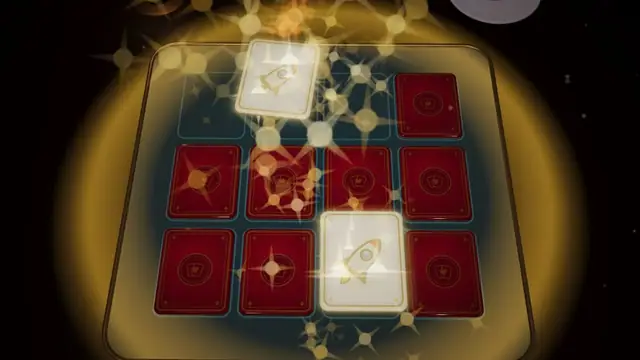
Lucky Freex
Spot each called number on your 5 by 5 card before its timer runs out.
- Developer
- GAMEFREEX
- Released
- Updated
- Game engine
- HTML5
- Platforms
- Browser (desktop, mobile, tablet), installable app (PWA)
- Orientation
- Portrait
- Controls
- Keyboard, Mouse, Touch, Controller
- Multiplayer
- Yes, with friends: score race, up to 4 players
- Offline play
- Yes, once opened or saved with Download games for offline
- Price
- Free, no download, no sign-up
- Casual1
- Portrait53
- Keyboard54
- Mouse57
- Multiplayer53
Controls
Computer
- Click the number on your card
- Or arrows to move the frame, Space to mark
Phone or tablet
- Tap the number on your card
Controller
- Left stick or D-pad: move the frame over the card
- A: mark the number
- Start: pause
Lucky Freex: how to play, tips and FAQ
Written by the GAMEFREEX team.
You get a 5 by 5 star card of glossy 3D tiles with numbers from 1 to 50, and Lucky Freex, a number-spotting game, calls one number at a time on a golden star with a timer ring around it. If the number is on your card, find it and tap it before the ring empties: the tile flips over to a shiny star stamp. If it is not, do nothing and wait for the next call. Most calls are numbers on your card, so you will be busy.
The scoring rewards speed and consistency. Every mark is worth 100 points, plus up to 80 for how much timer was left, plus 25 for each step of your current streak (capped at 250). That total is then multiplied by a factor that grows 2 percent with every call, so marks late in a round are worth far more than early ones. A full row, column or diagonal adds 500 per line, and filling the whole card adds 2,000 and ends the round on a high.
Calls start every 4 seconds and tighten toward 1.4 seconds as the label moves from Easy to Medium, Hard and Super fast. Miss three numbers that were on your card and the round is over.
- Visual search
- Reaction time
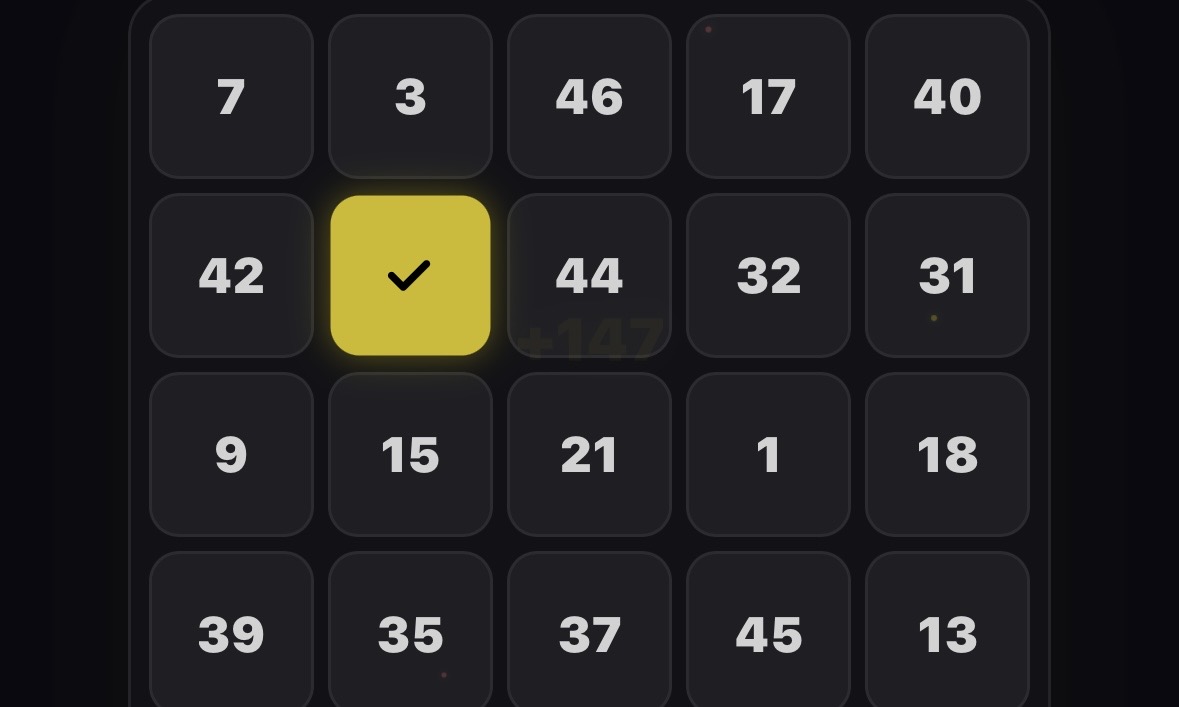
At a glance
- Card
- 5 by 5, numbers 1 to 50
- Game ends
- 3 misses, full card or 50 calls
- Call time
- 3.9 s, down to 1.4 s
- Lines on a card
- 12, worth 500 each
- Full card
- +2,000
How to play Lucky Freex
- Read the called number on the golden star.
- Tap or click it on the card if it is there. With a keyboard or controller, move the frame over the card and press Space or A.
- Mark it before the ring empties to keep your streak going.
- Ignore numbers that are not on your card. They never count against you.
Controls, action by action
| Action | Computer | Phone or tablet |
|---|---|---|
| Mark a number | Click it on your card, or move the frame with the arrows and press Space | Tap it on your card |
| With a controller | D-pad or left stick moves the frame, A marks | D-pad or left stick moves the frame, A marks |
| Pause or restart | Buttons in the top bar | Buttons in the top bar |
How the calls are drawn
Your card holds 25 different numbers, so exactly half of the 50 possible numbers are on it. Each call has a 70 percent chance of picking one of your unmarked numbers that has not been called yet. Otherwise it picks any uncalled number from 1 to 50, which can still land on your card. So more than 7 calls in 10 concern you.
No number is ever called twice, and that has two consequences. A number you miss is gone for good: its cell stays empty, and every row, column and diagonal through it can no longer score. And after 50 calls the pool is empty and the round ends, lives or not. Since all 50 numbers get called by then, a round with no misses always finishes with a full card.
The strip at the bottom lists the last 7 calls. The current one is gold, the ones you found stay lit, and the ones you missed turn pink.
The timer and the difficulty labels
Once you mark the called number, the next call comes about two thirds of a second later instead of waiting out the timer. A call that is not on your card stays up for its full time. Call 1 lasts 3.9 seconds and each call is 0.1 seconds shorter than the one before. After call 12 an extra 0.04 seconds per call is taken off, so calls reach the 1.4 second floor at call 22. The label at the bottom reads Easy up to call 5, Medium up to 12, Hard up to 20 and Super fast after that.
The ring around the caller star empties as the time runs out. It turns from mint to coral, and a soft tick plays every quarter of a second through the last 30 percent.
Scoring in detail
A mark is worth 100, plus up to 80 for the share of the bar still left, plus 25 for each mark in your current streak after the first, counted up to 10. That total is multiplied by 1 + 0.02 x the number of calls so far. A mark at call 50 with a full bar and a streak of 11 or more is worth (100 + 80 + 250) x 2 = 860 points.
Lines pay 500 each, and one mark can finish several at once. The center cell belongs to its row, its column and both diagonals, so it can close 4 lines in one tap for 2,000. With 5 rows, 5 columns and 2 diagonals, a full card holds 12 lines worth 6,000, before the 2,000 full card bonus.
Tips to score higher
- Spend the first few seconds reading your card row by row. Knowing roughly where the 40s sit saves real time later.
- Tapping a wrong cell costs nothing, but a missed number costs a life and resets the streak, which is the expensive part.
Common mistakes
- Rushing taps on cells you are not sure about. A wrong cell costs nothing, but it also wastes the time you need to find the right one, and speed is only worth up to 80 points before the multiplier.
- Planning a line through a cell you already missed. That number will never be called again, so look at the lines that are still open instead.
- Tapping the previous number after a new call appears. Only the number shown right now can be marked, and an old cell does nothing.
- Giving up after one or two misses. Marks late in the round carry the largest multiplier, so the last calls are worth far more than the first ones.
Lucky Freex FAQ
What counts as a miss?+
Only a called number that is on your card and that you did not mark before the timer ran out.
Why are my points so much higher late in a round?+
Each call raises a multiplier by 2 percent. Fifty calls in, every mark is worth twice what it was at the start.